Theodore T.Ho
- theodore.ho@austin.utexas.edu
- BME 1.108B
Aging and longevity; Alzheimer’s disease and neurodegenerative diseases; Optogenetics and neuromodulation; Neural activity imaging; Clinical translation
About
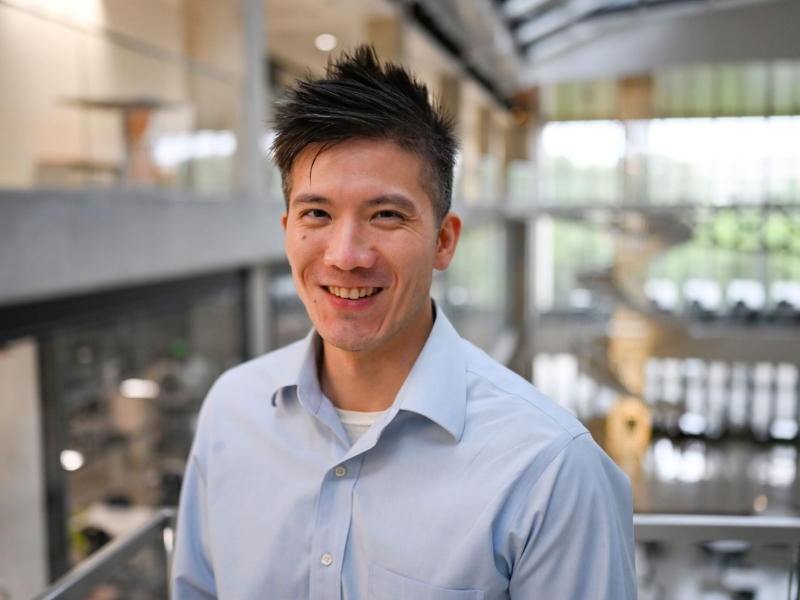
Ted Ho completed a joint A.B./S.M. degree program at Harvard University in Human Developmental and Regenerative Biology/Bioengineering, where he studied stem cell biology and developed a novel nanoparticle drug delivery system. He received his Ph.D. in Biophysics from the University of California, San Francisco, working with leading stem cell biologist Dr. Emmanuelle Passegué, where he discovered novel mechanisms of stem cell aging, uncovered new roles of autophagy in controlling cell fate and function, and leveraged longevity paradigms and interventions to uncouple cell-intrinsic stem cell aging from systemic organismal aging.
Ted then conducted his postdoctoral work in systems neuroscience with renowned optogenetics pioneer Dr. Karl Deisseroth at Stanford University, as an HHMI/Jane Coffin Childs and NIH K99 Postdoctoral Fellow, where he discovered new neural mechanisms of cognitive decline during aging and Alzheimer’s disease progression, and developed spatiotemporally precise optogenetic approaches to fully restore neural encoding and learning abilities in Alzheimer’s disease-related model mice. Ted has received many awards, fellowships and grants, such as a Forbes 30 Under 30 selection and a K99/R00 Pathway to Independence Award. He has published highly-cited work in leading journals such as Nature, Science, Cell Stem Cell and Nature Cell Biology. Ted is deeply committed to mentorship and supporting his trainees and students in all aspects of their education and professional development.
Educational Qualifications
Ph.D., Biophysics, University of California, San Francisco (2017)
B.A./M.S., Human Developmental and Regenerative Biology/Bioengineering, Harvard University (2012)
Select Awards & Honors
- 30 Under 30 – Forbes
- K99/R00 Pathway to Independence Award